About the Conference
Advancing Sustainable Energy, Water Security and Smart Automation through Intelligent Technologies.
Thematic Vision
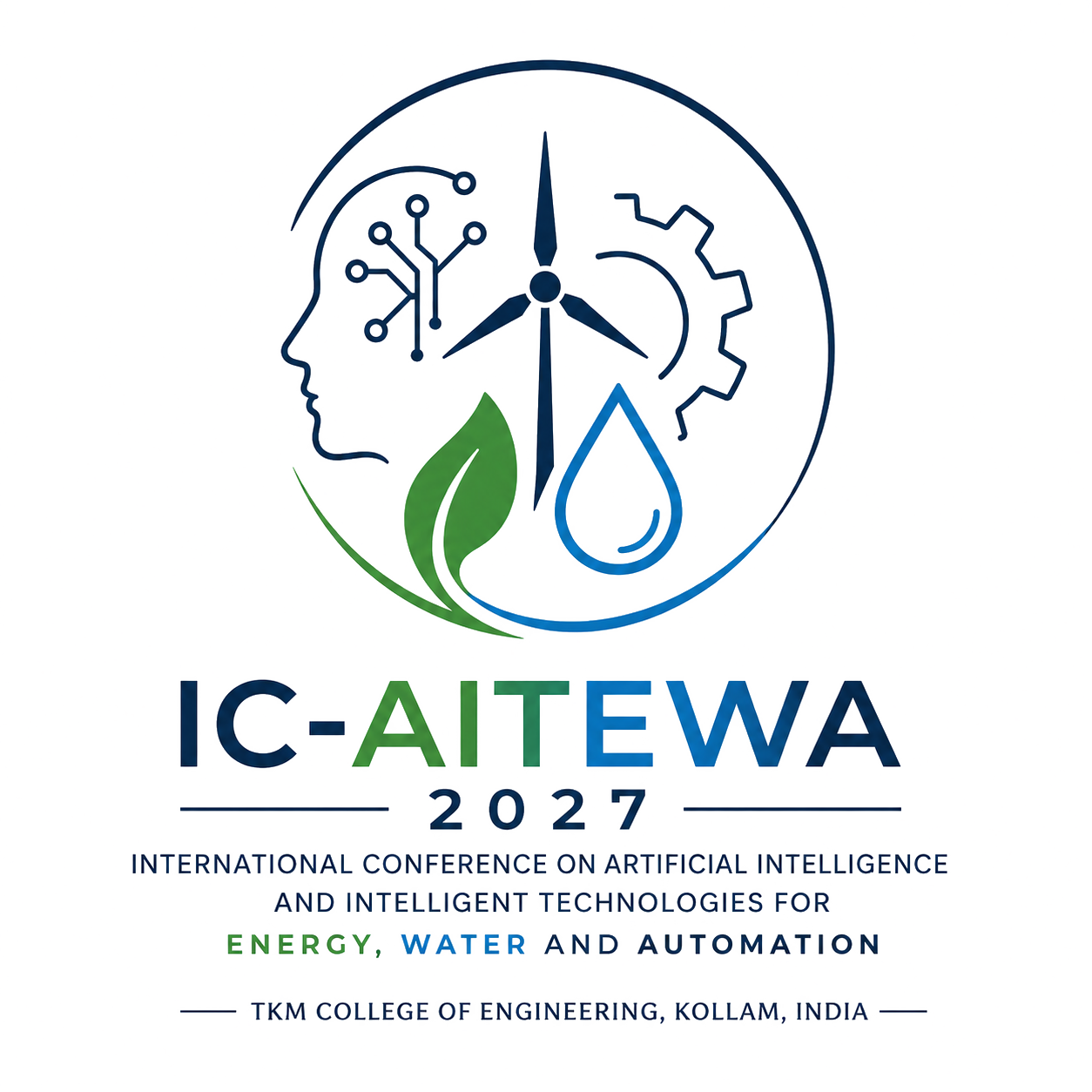
IC-AITEWA 2027 – International Conference on Artificial Intelligence and Intelligent Technologies for Energy, Water and Automation brings together researchers, academicians, industry leaders, innovators, and young researchers to explore how intelligent technologies can address some of the world’s most pressing engineering challenges.
Held at TKM College of Engineering, Kollam, the three-day international conference is centred on the theme “Advancing Sustainable Energy, Water Security and Smart Automation through Intelligent Technologies.” The conference will create a dynamic platform for exchanging ideas, presenting cutting-edge research, fostering interdisciplinary collaboration, and building meaningful international and industry partnerships across Artificial Intelligence, Sustainable Energy, Water Technologies, Intelligent Manufacturing, Robotics, Digital Twins, Industry 5.0, and Smart Infrastructure.
Featuring international and national plenary keynote speakers, technical sessions, expert panels, research presentations, innovation showcases, pre-conference workshops, and an industry exhibition, IC-AITEWA 2027 aims to connect research with real-world impact and bring together diverse perspectives to shape a smarter, more sustainable, and technologically advanced future.
Core Synergy
18–20 March 2027Interdisciplinary Focus
Tri-Departmental Collaboration
IC-AITEWA 2027 integrates deep engineering rigor across Mechanical, Computer Science, and Chemical disciplines to pioneer intelligent systems for sustainable infrastructure and environmental resilience.
Host Institution & Collaborating Departments
Anchored by the legacy of TKM College of Engineering and powered by interdisciplinary synergy across three pioneering academic departments.
TKM College of Engineering (Main Institution)
Established 1958 • Kollam, Kerala, India • Affiliated with APJAKTU
Established in 1958, TKM College of Engineering (TKMCE) stands as a premier pillar of engineering excellence, commanding a powerful international footprint. The institute bridges rigorous academics with global standards through active partnerships with world-renowned universities across the UK, Finland, and Japan. Its global alumni network features distinguished leaders at the helm of international organizations, space research agencies, and multinational enterprises. TKMCE continuously cultivates visionary technocrats equipped to architect solutions for complex cross-border challenges, cementing its reputation as a distinguished cradle of world-class innovation and technical leadership.
1958
Year Established
NBA
Accredited Programmes
Global
UK, Finland & Japan Ties
Alumni
Global Agency Leaders
Collaborating Academic Departments
Interdisciplinary leadership advancing research in Mechanical, Computing, and Chemical Engineering
Mechanical Engineering Department
TKMCE • NBA-Accredited
The Mechanical Engineering Department at TKMCE exemplifies world-class standard, distinguished by a prestigious multi-year national accreditation that aligns with global engineering benchmarks. Driven by active international collaborations including technical internships and joint initiatives with institutions like Tokyo Metropolitan University students gain hands-on exposure to advanced global industrial systems. The department empowers future innovators through high-impact research, SAE global chapters, and competitive robotics. Its graduates routinely secure advanced fellowships at elite foreign universities and spearhead manufacturing, automotive, and energy innovations across multinational corporate landscapes worldwide.
Collaborative Pillars:
Computer Science & Engineering Department
TKMCE • AI & Digital Hub
The Computer Science & Engineering Departmentis a vibrant epicentre of digital innovation, propelling TKMCE onto the global technology map. Aligning its curriculum with fast-evolving international tech paradigms, the department fosters high-end proficiency in artificial intelligence, cloud infrastructure, and advanced computing. Through strategic synergy with global tech giants and robust coding communities like ACM and IEEE, students consistently excel in international hackathons and open-source ecosystems. TKMCE computer science alumni occupy elite architectural and leadership roles within Silicon Valley titans and global R&D hubs, driving digital transformation on a worldwide scale.
Collaborative Pillars:
Chemical Engineering Department
TKMCE • Green Energy & Materials
The Chemical Engineering Department at TKMCE bridges fundamental scientific discovery with sustainable global industrial applications. The curriculum emphasizes cutting-edge process design, green energy solutions, and environmental stewardship, meeting rigorous international criteria. Students and faculty actively engage in transnational research addressing global challenges such as clean energy and sustainable materials. The department’s dynamic global alumni network commands influential roles in international chemical corporations, petroleum sectors, and premier global research institutions, turning complex molecular concepts into sustainable, world-changing solutions.
Collaborative Pillars: